
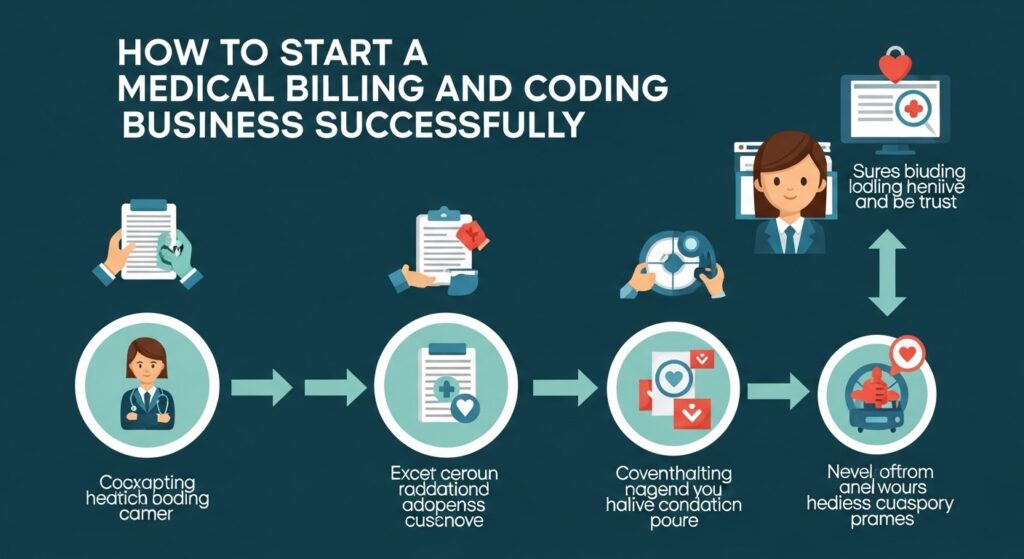
Starting a healthcare-related venture can feel overwhelming, but learning how to start a medical billing and coding business is one of the most practical and rewarding paths for entrepreneurs. With increasing administrative burdens on healthcare providers, the demand for outsourced billing and coding services continues to rise. This creates an excellent opportunity for individuals who want to build a scalable, service-based business with relatively low startup costs.
This in-depth guide will walk you through every stage of building a successful medical billing and coding business—from understanding the industry to setting up operations, attracting clients, and growing sustainably.
Understanding the Medical Billing and Coding Industry
Medical billing and coding is the process of translating healthcare services into standardized codes and submitting claims to insurance companies for reimbursement. Accuracy, compliance, and efficiency are critical, which is why many providers prefer outsourcing to specialized service providers rather than handling billing internally.
Today, medical billing and coding companies play a vital role in keeping clinics financially healthy by reducing claim denials, improving cash flow, and ensuring regulatory compliance.
Why Medical Billing and Coding Is a Profitable Business
Before diving into how to start a medical billing and coding business, it’s important to understand why this industry is so attractive:
- Growing demand due to complex insurance regulations
- Low overhead compared to clinical businesses
- Ability to work remotely or from home
- Recurring monthly revenue
- Opportunity to scale nationwide
Healthcare providers across specialties increasingly rely on external partners instead of building in-house billing teams.
Step 1: Learn the Fundamentals of Medical Billing and Coding
Success begins with knowledge. Even if you plan to outsource some tasks later, understanding the basics yourself is essential. Key areas include:
- ICD-10, CPT, and HCPCS coding systems
- Insurance claim submission workflows
- Denial management and appeals
- HIPAA compliance and data security
- Payment posting and accounts receivable
A strong foundation allows you to confidently compete with established medical billing companies in usa.
Step 2: Decide Your Business Scope and Services
Not all billing businesses offer the same services. You need to decide what your company will specialize in, such as:
- End-to-end medical billing
- Coding-only services
- Accounts receivable follow-ups
- Denial and appeals management
- Specialty-focused billing (mental health, cardiology, etc.)
Many new entrepreneurs start with a limited scope and expand over time, similar to how top medical billing companies began.
Step 3: Get Training or Certification (Highly Recommended)
While certification is not legally mandatory, it significantly boosts credibility and client trust. Courses and certifications help you understand real-world billing challenges and best practices.
Certification also helps your business stand out among companies for medical billing and coding, especially when targeting professional clinics.
Step 4: Register Your Business and Handle Legal Setup
To operate professionally, your business must be legally registered. Typical steps include:
- Choosing a business structure (LLC is common)
- Registering your business name
- Opening a business bank account
- Obtaining any required local licenses
A properly registered medical billing company in usa builds trust with healthcare providers and insurance payers.
Step 5: Ensure HIPAA Compliance and Data Security
HIPAA compliance is non-negotiable in healthcare. Your systems and processes must protect patient data at all times. This includes:
- Secure billing software
- Encrypted data storage
- Employee confidentiality agreements
- Clear compliance policies
Healthcare providers will not work with billing partners who cannot demonstrate compliance.
Step 6: Invest in Reliable Medical Billing Software
Billing software is the backbone of your operations. Choose a platform that offers:
- Claim scrubbing and error detection
- Insurance payer integrations
- Real-time reporting
- Secure cloud-based access
Professional tools help you operate at the same level as large medical billing companies in texas and other competitive markets.
Step 7: Identify Your Target Market
Instead of targeting everyone, define your ideal clients. Options include:
- Solo physicians
- Small private practices
- Specialty clinics
- New healthcare startups
Targeting a specific niche helps you compete effectively, even against medical billing companies in new york with larger teams.
Step 8: Build Trust Without a Large Track Record
New businesses often worry about credibility. You can build trust by:
- Offering free billing audits
- Providing trial billing periods
- Sharing compliance documentation
- Demonstrating software expertise
Transparency and professionalism often matter more than years in business.
Step 9: Offer Credentialing as a Value-Added Service
Many providers struggle with insurance enrollment and revalidation. By offering medical credentialing, you add significant value to your services.
Credentialing services include:
- Provider enrollment with payers
- Maintaining active credentials
- Managing revalidation deadlines
Adding medical credentialing services increases revenue and strengthens long-term client relationships.
Step 10: Understand Credentialing Roles in Healthcare
In larger organizations, credentialing is often handled by a medical credentialing coordinator atria physician practice or similar role. Understanding this process helps you communicate effectively with clinics and position your services professionally.
This knowledge allows your business to compete with established medical credentialing companies.
Step 11: Set Competitive and Transparent Pricing
Pricing models vary across the industry. Common options include:
- Percentage-based pricing (4%–10% of collections)
- Flat monthly fees
- Per-claim billing
Research what medical billing companies in usa charge and ensure your pricing reflects your services and target market.
Step 12: Create a Professional Online Presence
Your website is often the first impression. It should clearly outline:
- Services offered
- Specialties served
- Compliance standards
- Contact details
A professional website helps you compete with well-known medical billing and coding companies.
Step 13: Market Your Medical Billing Business Effectively
Client acquisition is critical. Effective marketing strategies include:
- Cold emailing clinics
- LinkedIn outreach to practice managers
- Networking with healthcare consultants
- Referrals from existing clients
Consistency in outreach is key to landing your first long-term clients.
Step 14: Build Strong Client Relationships
Retention matters as much as acquisition. Keep clients satisfied by:
- Providing regular performance reports
- Communicating clearly about issues
- Reducing denials and AR days
- Offering proactive billing insights
Strong relationships help you grow steadily and earn referrals.
Step 15: Scale Your Business Strategically
Once you have stable clients, you can scale by:
- Hiring certified coders
- Outsourcing non-core tasks
- Expanding into new specialties
- Serving clients across multiple states
Many successful firms that started small are now recognized medical billing companies in usa serving nationwide practices
Common Mistakes to Avoid
When learning how to start a medical billing and coding business successfully, avoid these pitfalls:
- Ignoring compliance requirements
- Underpricing services
- Taking on too many clients too quickly
- Using outdated software
- Failing to track performance metrics
Avoiding these mistakes protects your reputation and cash flow.
Measuring Success in Medical Billing
Healthcare providers care about results. Track and report:
- Claim acceptance rate
- Days in accounts receivable
- Collection percentages
- Denial trends
Providing data-driven insights positions your business as a trusted partner rather than just a service vendor.
Long-Term Growth Opportunities
Over time, your business can expand into:
- Full revenue cycle management
- Multi-specialty billing
- Consulting and compliance services
- Training and outsourcing solutions
With the right systems, your company can grow alongside leading medical billing and coding companies.
Final Thoughts
Understanding how to start a medical billing and coding business successfully requires planning, education, and consistent execution. While the industry is competitive, demand continues to grow, and healthcare providers are always searching for reliable billing partners.
By focusing on compliance, delivering measurable results, and offering value-added services like credentialing, you can build a sustainable and profitable business. With patience and strategic growth, your startup can evolve into a trusted name in the medical billing and coding industry.