
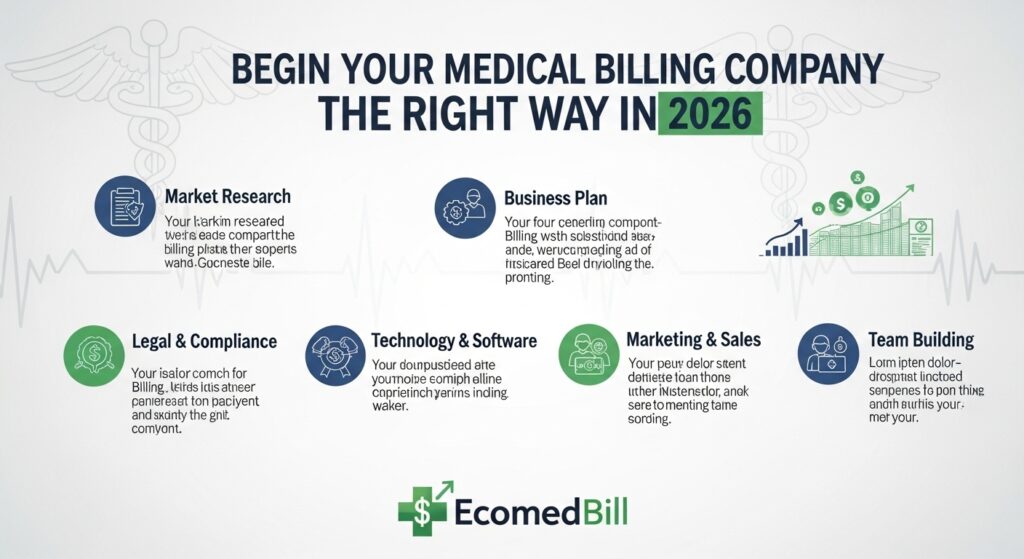
Starting a healthcare business in 2026 presents enormous opportunities, and one of the fastest-growing segments is medical billing. With increasing complexity in healthcare regulations, insurance claims, and reimbursement processes, providers are actively outsourcing billing services. Learning how to start a medical billing company the right way can position you for long-term profitability, scalability, and trust in the healthcare ecosystem.
This complete guide by EcomedBill walks you step by step through everything you need to know—from planning and legal setup to technology, compliance, client acquisition, and growth strategies—so you can confidently launch and grow a successful medical billing business in 2026.
What Is a Medical Billing Company?
A medical billing company acts as an intermediary between healthcare providers and insurance companies. It ensures that medical services are coded correctly, claims are submitted on time, payments are collected efficiently, and denials are managed properly.
Healthcare providers increasingly rely on professional billing services because of:
- Complex insurance rules
- Frequent coding updates
- Strict compliance requirements
- Rising administrative costs
This growing demand makes medical billing a highly profitable and recession-resistant business.
Why 2026 Is the Best Time to Start a Medical Billing Company
The healthcare industry continues to evolve rapidly, and 2026 brings unique advantages:
- Increased outsourcing by clinics and private practices
- Growth in telemedicine and remote care
- Stricter compliance regulations increasing demand for experts
- Advanced billing software powered by automation and AI
If you are considering how to start a medical billing company, 2026 offers a perfect balance of opportunity and innovation.
Step 1: Understand the Medical Billing Industry
Before launching your business, it’s essential to understand how medical billing works. This includes:
- Medical coding systems (ICD-10, CPT, HCPCS)
- Insurance claim submission workflows
- Payment posting and reconciliation
- Denial management
- Compliance and patient data security
Many new entrepreneurs gain experience by working with medical billing and coding companies before launching their own business.
Step 2: Get the Right Education and Certifications
While certification is not legally mandatory, it significantly boosts credibility and client trust. Recommended certifications include:
- Certified Professional Biller (CPB)
- Certified Medical Reimbursement Specialist (CMRS)
- Certified Coding Specialist (CCS)
Training ensures you understand payer policies, compliance standards, and industry best practices—critical for long-term success.
Step 3: Create a Solid Business Plan
A detailed business plan is essential when you start a medical billing company. Your plan should include:
- Business structure (solo, partnership, LLC, corporation)
- Target market (specialties, small practices, hospitals)
- Pricing model (percentage of collections or flat fee)
- Startup costs and monthly expenses
- Revenue projections
- Marketing and growth strategy
A clear plan helps you avoid costly mistakes and makes it easier to secure funding if needed.
Step 4: Choose Your Business Structure and Register
Register your business legally to operate without risk. Steps include:
- Choose a business name
- Register as an LLC or corporation
- Obtain an EIN from the IRS
- Open a business bank account
- Acquire necessary state or local licenses
If you plan to serve clients in multiple states, ensure compliance with state-specific healthcare regulations, especially if targeting medical billing companies in New York or other highly regulated regions.
Step 5: Invest in Medical Billing Software
Technology is the backbone of any successful medical billing company. In 2026, your software should support:
- Automated claim submission
- Eligibility verification
- Denial tracking
- Payment posting
- HIPAA compliance
- Integration with EHR systems
Cloud-based billing platforms allow you to operate remotely and scale easily as your client base grows.
Step 6: Ensure HIPAA Compliance and Data Security
Healthcare data security is non-negotiable. Your company must comply with HIPAA regulations to protect patient information. This includes:
- Secure servers and encrypted data
- Access controls and staff training
- Business Associate Agreements (BAAs)
- Regular compliance audits
Failure to comply can result in severe penalties and loss of client trust.
Step 7: Define Your Target Market
Successful billing companies focus on specific niches rather than trying to serve everyone. Popular niches include:
- Primary care clinics
- Mental health providers
- Dental practices
- Physical therapy clinics
- Urgent care centers
Specializing allows you to stand out from competitors and compete with top medical billing companies more effectively.
Step 8: Set Competitive Pricing
Your pricing should reflect the value you provide while remaining competitive. Common pricing models include:
- Percentage of monthly collections (typically 4%–10%)
- Flat monthly fee per provider
- Hybrid models
Research competitors, especially local searches like medical billing company near me, to understand market expectations.
Step 9: Build a Skilled Team
As your company grows, you may need:
- Certified medical billers
- Medical coders
- Account managers
- Compliance specialists
Even if you start solo, having a plan for hiring ensures smooth expansion when client demand increases.
Step 10: Market Your Medical Billing Company
Marketing is essential to attract and retain clients. Effective strategies include:
- Professional website with SEO optimization
- Local SEO targeting healthcare providers
- Content marketing and blogs
- LinkedIn outreach
- Networking with physicians and clinics
- Referral partnerships
Highlight your expertise, compliance standards, and success metrics to compete with established medical billing companies in USA.
Step 11: Acquire Your First Clients
Landing your first clients is often the most challenging step. Start by:
- Contacting local clinics and practices
- Offering free billing audits
- Providing introductory discounts
- Demonstrating revenue improvement potential
Trust and transparency are key when working with healthcare providers.
Step 12: Scale Your Business Strategically
Once your operations are stable, focus on scaling:
- Add new specialties
- Expand into new states
- Automate workflows
- Partner with EHR providers
- Invest in marketing and sales teams
Scaling allows you to grow from a small operation into a nationally recognized billing firm.
Common Mistakes to Avoid
When learning how to start a medical billing company, avoid these common pitfalls:
- Underestimating compliance requirements
- Choosing cheap or outdated software
- Lack of specialization
- Poor client communication
- Weak denial management processes
Avoiding these mistakes sets a strong foundation for long-term success.
Why Choose EcomedBill for Guidance?
EcomedBill helps entrepreneurs and healthcare professionals build reliable billing businesses by offering:
- Industry expertise
- Compliance-focused strategies
- Scalable operational models
- Revenue optimization insights
Whether you’re launching your first billing company or expanding an existing one, EcomedBill provides the roadmap for success.
Final Thoughts
Starting a medical billing business in 2026 is both a profitable and impactful venture. With rising healthcare complexity and increasing demand for outsourcing, there has never been a better time to enter the industry.
By following the right steps—education, planning, compliance, technology, and marketing—you can confidently start a medical billing company that delivers value to healthcare providers and achieves sustainable growth.